
01 / 08
What is a concrete and dirt dumpster rental?
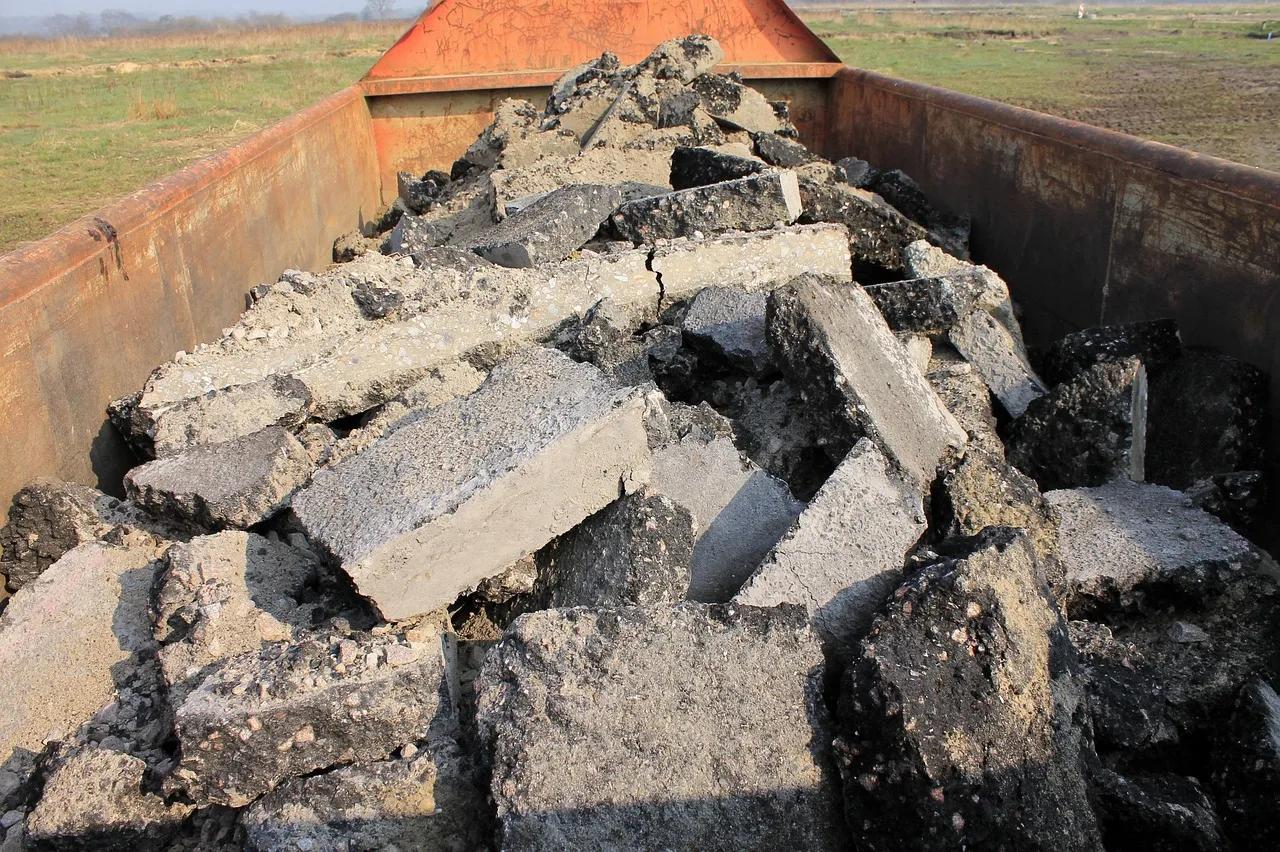
A concrete and dirt dumpster rental is a roll-off container booked for heavy debris such as concrete, block, brick, pavers, soil and rock. Because these materials are dense, we size the container around the weight allowance instead of the volume, and load it differently.
Most dumpster rentals are sized by space: how much will fit. Heavy debris flips that. A container can look half empty and already be at its weight allowance. That's why we treat concrete and dirt as their own type of rental and ask what's going in before we recommend a size.
- Concrete: patio slabs, walkways, driveways, steps and footings.
- Masonry: concrete block, brick, stone and old pavers.
- Soil and fill: dirt from a garden dig, pool fill, regrading or a trench.
- Rock and gravel: landscape rock, gravel beds and base material.
- Tile and mortar: heavy too, and often part of the same job.
02 / 08
Why does heavy debris need a smaller dumpster?
Heavy debris needs a smaller dumpster because concrete and dirt reach the weight allowance long before they fill the container. A smaller box keeps the load within what the truck can safely carry and within the allowance, so you avoid overweight charges.
Every container size includes a weight allowance. With household junk, you run out of space first. With concrete or soil, you run out of weight first. Filling a big container to the top with concrete would make it too heavy to haul safely, and overweight loads can cost extra.
So the advice runs against instinct: for heavy debris, go smaller. A 10 yard dumpster is our usual pick for concrete, dirt and tile. If there's more than one container's worth, a swap is safer than a bigger box.
10 Yard roll-off. Good for garage cleanouts, a bathroom remodel, small yard jobs.
Typical prices from our published rates. Your quote confirms the exact price for the size, rental length, debris weight and placement.
For concrete, dirt and tile, the 10 yard is usually the right call. Ask us before choosing a bigger box for heavy debris.
| Load type | What runs out first | Usual container |
|---|---|---|
| Household junk and furniture | Space | 20 yard or larger |
| Mixed remodel debris | Space, sometimes weight | 20 or 30 yard |
| Tile and mortar | Weight | 10 yard |
| Concrete, block, brick, pavers | Weight | 10 yard, swap if needed |
| Dirt, soil, rock | Weight | 10 yard, swap if needed |
03 / 08
Should you keep concrete and dirt separate from other debris?
Yes, where you can. Clean loads of only concrete or only dirt are easier to dispose of and recycle, and keeping heavy debris apart from light trash stops the weight allowance being used up by a mix of everything.
Clean concrete and clean fill are often recycled or reused, while a mixed load has to be handled as general debris. Mixing also makes it hard to judge weight. A few bags of trash on top of broken slab is fine, but a container that's half concrete and half furniture is a guessing game.
- Keep trash, wood and plastic out of a concrete or dirt load when possible.
- Remove roots and large plant material from soil if you can.
- Tell us if rebar or wire mesh is in the concrete.
- Keep hazardous items out completely: chemicals, paint, asbestos, batteries and tires are not accepted.
04 / 08
Which jobs need a heavy debris dumpster?
Patio and driveway tear-outs, paver replacements, pool fill and garden digs, block wall removal and slab work all produce heavy debris. Contractors, landscapers and homeowners use our heavy debris containers for these jobs across Miami-Dade, Broward and Palm Beach counties.
| Job | What comes out | Tip |
|---|---|---|
| Patio or walkway tear-out | Broken slab, sand base | Break pieces small enough to lay flat |
| Paver driveway replacement | Pavers, base rock, sand | Clean paver loads are easier to recycle |
| Pool fill or garden dig | Soil, rock, roots | Shake out roots and plants where you can |
| Block wall or planter removal | Concrete block, stucco, rebar | Tell us about rebar when you book |
| Bathroom or floor tile removal | Tile, mortar, backer board | Weight adds up faster than it looks |
Rather not do the breaking and lifting? Our team handles concrete removal and concrete demolition, and we also offer tile removal.
Got a slab, pavers or a dirt pile to clear?
Tell us the material and roughly how much, and we'll recommend a container that stays within the weight allowance.
05 / 08
Where should a concrete dumpster be placed?
Place a concrete or dirt dumpster on a firm, level surface as close to the work as the truck can reach. A loaded heavy container presses hard on the ground, so tell us about pavers, soft ground or decorative concrete before delivery.
- Firm ground: a driveway or solid lot is better than grass or sand, especially after rain.
- Short carry: concrete is tiring to move. A container close to the work saves hours of wheelbarrow trips.
- Driveway surfaces: pavers and decorative concrete can be marked by a heavy load. Ask about protecting them.
- Clear approach: the truck needs room and overhead clearance to drop and lift.
- Street placement: containers on a public road or swale usually need a permit. See our dumpster permits overview.
06 / 08
How does renting a dumpster for concrete or dirt work?
Tell us the material and roughly how much there is, and we'll recommend a container and quote it. We deliver to a firm spot near the work, you load it evenly, call when it's at the allowance, and we haul it away or swap it.
- 1Describe the load. Concrete, dirt, pavers or tile, plus a rough area or pile size. Photos help.
- 2Get a size and quote. We recommend a container that keeps the load within its weight allowance.
- 3We deliver. Usually within 24 to 48 hours, depending on availability and location.
- 4Load it evenly. Spread heavy debris across the floor of the container and stop where we advised.
- 5Call for pickup or a swap. If there's more to go, we can bring an empty container.
- 6We haul it away. Heavy debris is disposed of properly, with recycling where possible.
07 / 08
How is a heavy debris dumpster priced?
A heavy debris dumpster is priced on the container size, rental length, debris type and weight, and placement. Concrete, dirt and roofing use up the weight allowance faster than other debris, so an accurate description of the load is the key to an accurate quote.
Every quote is free and lists what's included, with no hidden fees. Overweight loads can cost extra, which is exactly why we ask so many questions about heavy jobs. Our dumpster rental prices breakdown explains each factor. For mixed renovation jobs where concrete is only part of the debris, see our construction dumpster rental options.
08 / 08
Why rent your heavy debris dumpster from Evergreen Waste?
We size heavy debris containers by weight, not guesswork, and we'll talk you down a size when that saves money. Our local team is based in Fort Lauderdale, answers seven days a week, and serves Miami-Dade, Broward and Palm Beach counties.
- Weight-first advice: fewer overweight surprises.
- Swaps on request: big slab jobs get cleared in safe loads.
- Removal crews too: we can break and remove the concrete if you'd rather not.
- Seven-day phone hours: 7:30 AM to 9 PM, Monday to Sunday.
Book a concrete or dirt dumpster
Call or request a free quote. Describe the material and we'll match the container to the weight.